
Croat Nurs J. 2026; 10(1): 37-49 Original scientific paper



1 Janko Babić
2 Renata Barić
1 Iva Takšić
1 University of Applied Health Sciences, Zagreb, Croatia
2 University of Zagreb, Faculty of Kinesiology, Zagreb, Croatia

Article received: 02. 10. 2025.

Article accepted: 08. 12. 2025.

https://doi.org/10.24141/2/10/1/4

Author for correspondence:
Janko Babić
University of Applied Health Sciences, Zagreb, Croatia e-mail: janko.babic@zvu.hr

Keywords: physical activity, motivation, EMI-2, factor analysis, students



Introduction. Physical inactivity represents a major public health concern, contributing to the develop- ment of numerous chronic diseases.
Aim. The aim of this study was to simplify the Exer- cise Motivation Inventory-2 (EMI-2) using exploratory and confirmatory factor analysis in order to identify a new, meaningful factor structure that effectively
explains the underlying motives for physical activity among university students.
Methods. The study was conducted on 1,304 stu- dents of the University of Zagreb (65.7% female). The Croatian version of the EMI-2 questionnaire was employed, comprising 54 items designed to assess various intrinsic and extrinsic motives for exercise, which in the original English version are grouped into 14 factors. Data were analyzed using exploratory factor analysis (EFA) to identify latent factors, fol- lowed by confirmatory factor analysis (CFA) to verify the factor structure. Reliability was assessed using Cronbach’s alpha coefficient.
Results. The exploratory factor analysis initially iden- tified eight factors; however, the scree plot suggested a three-factor solution encompassing psychological, social, and health-related motives for exercise. The simplified model demonstrated high internal consist- ency (Cronbach’s alpha: psychological motives = 0.934; social motives = 0.919; health motives = 0.922). The confirmatory factor analysis confirmed the validity of the model with acceptable fit indices (CFI = 0.92; NFI
= 0.91; IFI = 0.92), while regression analysis indicated that these factors significantly predicted students’ leisure-time physical activity.
Conclusions. The simplified version of the EMI-2 pro- vides a reliable and valid tool for assessing motives for physical activity, particularly within the student popu- lation. Simplifying the factor structure facilitates its use in both research and practical settings, supporting the development of targeted intervention programs aimed at promoting physical activity. The findings highlight the importance of psychological, social, and health-related motives in understanding and improv- ing physical activity behaviors. Future research should examine the applicability of this model across differ- ent populations to confirm its universal relevance.


Physical inactivity is a major public health issue, with substantial evidence demonstrating its contribution to the development of numerous chronic diseases and conditions. Recognition of the health and functional risks associated with a sedentary lifestyle has led to a wide range of recommendations in favor of regular physical activity. Current World Health Organization (WHO) public health guidelines (1) for adults aged 18–64 years recommend at least 150 minutes of mod- erate-intensity physical activity per week, or 75 min- utes of vigorous activity. Moreover, aerobic activities should be performed in bouts of at least 10 minutes. For additional health benefits, WHO advises adults within this age range to increase moderate-intensity physical activity to 300 minutes per week, or vigorous activity to 150 minutes per week. Strength exercises involving major muscle groups should be performed at least twice per week. Individuals who engage in physi- cal activity more frequently obtain additional benefits, and alongside aerobic exercise they are advised to in- clude strength and flexibility training at least twice weekly. Such activity further assists in maintaining normal body weight, improving muscular strength and endurance, and preserving physical function, thereby increasing the likelihood of long-term adherence to regular physical activity (2).
Research findings indicate that physical inactivity rep- resents a serious threat to health, functional ability, and quality of life, ranking among the three leading causes of morbidity, mortality, and disability worldwide—along- side smoking and inadequate diet (3, 4). According to recent WHO data (5), nearly one-third (31%) of adults worldwide, approximately 1.8 billion individuals, failed to meet recommended physical activity levels in 2022. These findings point to a concerning upward trend, with physical inactivity increasing by approximately 5% between 2010 and 2022. The situation in Croatia is particularly alarming: as Bartoluci and Škorić (6) re- port, only around 17% of people are sufficiently active, while Greblo and colleagues found that 59% of Croatian adults do not engage in physical activity at all (7).
Although it might be expected that young adults, particularly university students, are the most physi- cally active population, studies consistently show that students worldwide often fail to meet minimum daily
activity recommendations, and that activity levels decline during the transition from secondary school to university (8, 9). A study from Portugal revealed that students walked more and spent less time sit- ting during the workweek, whereas weekend activity decreased, especially among female students (10). Croatian students also exhibit low activity levels, with participation varying by sociodemographic factors (11, 12, 13). Students recognize the importance of exercise but often do not practice it sufficiently (14, 15). Thus, targeted interventions to increase physical activity are needed, particularly among female students (12, 16).
Given the importance of physical activity and its pos- itive effects on psychophysical health, it is essential to identify the factors that predict engagement in physical activity. The decision to initiate, and even more so to maintain, regular exercise is strongly in- fluenced by psychological factors, with motivation being among the most important (17).
Self-Determination Theory (SDT) is a comprehensive theory of human motivation and personality, devel- oped through traditional empirical research, that emphasizes the importance of intrinsic resources for personality growth and behavioral self-regulation
(18). Due to functional and experiential differences between self-motivation and external regulation of behavior, much of SDT research has focused on dis- tinguishing and understanding different types of mo- tivation that drive behavior at any given moment.
According to SDT principles, physical activity may be driven by both intrinsic and extrinsic factors. Intrinsic motivation refers to behavior performed for the inher- ent enjoyment and satisfaction derived from the activ- ity itself. In contrast, extrinsic motivation characteriz- es behavior undertaken to achieve external outcomes, such as tangible rewards, avoidance of punishment, or the pursuit of recognition, status, or praise. From the SDT perspective, intrinsic motivation reflects a deeply rooted desire to apply and develop one’s skills and ca- pacities (18). Such motivation is connected to the in- creasing demands of the environment and the individ- ual’s ability to cope with those challenges. However, in the context of physical activity, intrinsic motivation alone may not be sufficient to initiate action; rather, the activity must also be enjoyable, offering a sense of pleasure and fun—features that fundamentally characterize intrinsically motivated activities. Indeed, one of the primary reasons people cite for engaging in exercise is that it is interesting, challenging, and en- joyable (Frederick & Ryan, 1995; as cited in 19).
At the same time, many sports and physical activities are predominantly influenced by extrinsic motivators. In such cases, individuals participate not because they inherently enjoy the activity, but because they derive some external benefit—whether in the form
search on psychological aspects of exercise and has proven to be a reliable and valid tool for understand- ing why individuals engage in physical activity (24).
of athletic achievement, improved health, enhanced
appearance, or maintenance of physical fitness. For
most individuals, participation in physical activity reflects a combination of intrinsic and extrinsic mo- tives, underscoring the importance of acknowledg- ing extrinsic motivation when designing strategies to promote engagement in exercise (19).
Teixeira et al. (20) conducted a systematic review of 66 empirical studies and concluded that autonomy sup- port, competence, and relatedness significantly con- tribute to motivation for physical activity. For example, when individuals feel they have control over their ex- ercise (autonomy) and experience a sense of achieve- ment (competence), they are more likely to sustain par- ticipation. Furthermore, social support and a sense of belonging enhance motivation to engage in exercise.
Interventions based on SDT that are designed to foster autonomy, competence, and relatedness have proven effective in increasing physical activity levels. Such interventions often include personalized exercise pro- grams that allow individuals to select preferred activi- ties, set their own goals, and receive continuous sup- port from trainers or peer groups (20, 21).
Research has also shown that students motivated by in- trinsic reasons, such as health concerns, are more likely to engage regularly in physical activity (22). In compari- son, women more frequently report extrinsic motives, while men more often emphasize health-related bene- fits (22). Additionally, cultural contexts and educational policies may significantly influence student motivation, as illustrated by studies conducted in China (23).
Measuring motivation for exercise and physical ac- tivity is therefore a crucial step toward the ultimate goal of developing effective intervention programs to increase physical activity. One of the most widely used instruments for assessing exercise motivation is the Exercise Motivations Inventory-2 (EMI-2), de- veloped by David Markland and David K. Ingledew in 1997 (24). The EMI-2 was designed to capture a broad spectrum of motives for physical activity par- ticipation, comprising 51 items across 14 scales that assess intrinsic and extrinsic motives, including so- cial recognition, health pressures, and body-related motives. The EMI-2 has been widely applied in re-

Given the complexity of the motivational structure reflected in the original EMI-2, the aim of this study was to employ exploratory and confirmatory factor analyses to derive a meaningful factor structure that reduces the number of factors while effectively cap- turing the underlying motives for exercise. This ap- proach follows Markland’s (25) suggestion that, due to practical limitations of analyses involving large numbers of motivational factors, grouping variables into a smaller set of latent constructs can provide both practical and theoretical clarity.


The study was approved by the Research and Ethics Committee of the Faculty of Kinesiology, University of Zagreb. Following the approval, authorization for data collection was obtained from each of the 10 faculties where the research was conducted in 2018. At each faculty, a designated contact person (most often the Vice-Dean for Research) proposed one or more course instructors, depending on the required number of stu- dents and the year of study, within whose classes the research could be carried out. After receiving consent from the respective instructors, data collection was conducted at the beginning of the agreed class ses- sion. Students present at that time were invited to participate, and completion of the questionnaire last- ed approximately 20–30 minutes.
Participation was voluntary. Before completing the questionnaire, students were informed that refusal to participate would have no negative consequences for their studies or their relationship with the instruc- tors, and conversely, that participation would not be financially compensated. They were also informed that by completing the questionnaire they consented
to take part in the study and that their participation is completely anonymous.
The study sample consisted of 1,304 students en- rolled at the University of Zagreb, originating from ten faculties that cover five scientific fields. Of the total sample, 857 participants were female students (65.7%), and 447 were male students (34.3%). The mean age of participants was 20.72 years, with the largest subgroup comprising students aged 19 years.
The sampling was quota-based with regard to the scientific fields represented at the University of Zagreb. All scientific fields were included, with the exception of the humanities and the arts. The dis- tribution of participants across fields closely corre- sponded to that reported by the Croatian Bureau of Statistics (26).
Croatian Version of the EMI-2 Questionnaire (24, 27)
The questionnaire consists of 54 items that repre- sent fourteen potential motives for exercise. These are: weight control, illness avoidance, revitalization, appearance, social pressure, stress management, health, strength, enjoyment of exercise, affiliation, medical prescription, competition, agility, and chal- lenge. Items are formulated to address the question of why a person exercises or would exercise, with re- sponses provided on a five-point Likert scale (1 = not at all true for me; 5 = very true for me). According to Vlašić et al. (27), Cronbach’s alpha coefficients dem- onstrated satisfactory internal consistency across all 14 motivational dimensions (0.61 < α < 0.83). Markland and Ingledew (24) developed the original Exercise Motivation Inventory from the perspective of Self-Determination Theory, initially attempting to categorize motives as either intrinsic or extrinsic. However, it was later shown that certain motives may be considered intrinsic or extrinsic depending on the individual’s perspective. Consequently, a strict di- chotomy was not established, although some groups of motives are clearly predominantly intrinsic (e.g., enjoyment of exercise, affiliation), while others are predominantly extrinsic (e.g., social pressure).
For data processing and analysis in this study, the statistical programs IBM SPSS Statistics 23 and Amos Graphics were employed. The method of analysis
used in Amos was maximum likelihood estimation, which is considered the most appropriate approach in most cases, particularly when the normality of the distribution of analyzed variables is violated (28).


The common-factor analysis aimed to establish a meaningful factor structure that would group exer- cise motives in a more parsimonious manner. Initially, eight factors with eigenvalues greater than 1 were extracted, but the rotated factor solution could not be meaningfully interpreted. Therefore, the scree test was used as the criterion for factor retention, a graphical method that clearly demonstrated that three factors accounted for substantially more vari- ance than the remaining factors (see Figure 1).
Subsequently, a new factor analysis was conducted with three predefined factors. The analysis of load- ings for individual exercise motives on the three fac- tors revealed that all three items belonging to the agility-related motives, as well as all three items from the health enhancement group, did not clearly load on any of the factors and were therefore excluded from further analysis. Consequently, a new factor analysis was performed on the remaining 48 manifest vari- ables (i.e., motives). After rotation of the factor axes, the following factor structure was obtained (Table 1).
When analyzing the item content in relation to their loadings on individual factors, it becomes evident that the first factor is saturated with exercise mo- tives related to enjoyment, revitalization, stress prevention, challenge, and strength enhancement. These can be classified as psychological motives, and accordingly, this factor was labeled “psychological motives for exercise.” Strength enhancement some- what diverges conceptually; however, it still repre- sents a positive motive in which an individual seeks self-improvement and greater strength—an aspect that may be interpreted not only in a physical but also in a psychological sense. Thus, the first factor is designated as psychological motives for exercise.
The second factor is saturated with motives related to social recognition, competition, social pressure,
and affiliation, and was therefore labeled social mo- tives for exercise. The third factor is saturated with motives related to appearance enhancement, weight control, and the prevention of health problems, and was labeled health motives for exercise.
Markland (25) notes that, due to the practical limi- tations of analyzing a large number of motivational factors, it is reasonable to group variables into a smaller number of latent constructs, especially when high internal consistency coefficients are obtained. Nevertheless, this approach inevitably reduces the level of detail and limits the precision of information on participants’ exercise motivation.
Cronbach’s alpha reliability coefficients for the three newly created scales (latent variables) were satisfac- tory: 0.75 for social motives, 0.78 for health motives, and 0.886 for psychological motives.
To verify the factor structure obtained through ex- ploratory factor analysis, a confirmatory factor anal- ysis was performed in AMOS, separately for each higher-order factor. For clarity, factor loadings for each factor are presented individually in the follow- ing figures; however, the analysis was carried out as a single integrated model including all manifest and latent variables of exercise motives.
Figure 2 presents the loadings of the manifest and la- tent variables underlying the construct psychological motives for exercise. It can be observed that, among the manifest variables, the lowest loadings were ob- tained for “Because I enjoy exercising” (0.61), belong- ing to the enjoyment factor, and “Because it gives me space to think” (0.59), belonging to the stress pre- vention factor. At the higher-order level, the lowest loading within the psychological motives for exercise factor was observed for the strength factor (0.59).
With regard to the factor loadings of the manifest and latent variables underlying the social motives for exercise (Figure 3), it can be observed that the lowest loadings were obtained for the manifest vari- ables “To fit in with society” (0.50) and “Because oth- ers encourage me to do so” (0.63). Both belong to the social pressure factor, whose overall factor loading was low (0.35), indicating a weak association with the higher-order social motives for exercise factor.
In the part of the confirmatory model related to the health motives for exercise (Figure 4), the lowest loadings were found for the manifest variables “To maintain my figure” (0.74) and “To avoid heart disease” (0.76), which belong to the factors weight control and prevention of health problems, respectively. The latter showed the weakest association (0.43) with the higher-order factor.
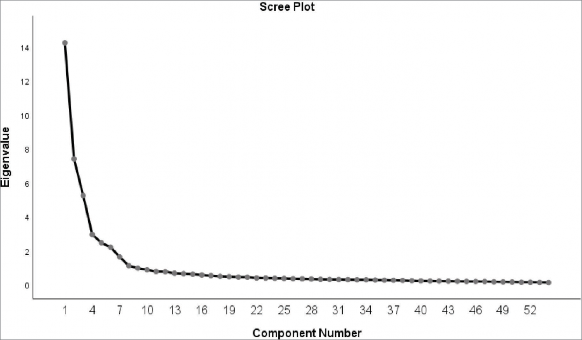
Figure 1. Scree plot of eigenvalues of the factors extracted from the EMI-2 questionnaire
Table 1. Rotated factor matrix of the modified Croatian version of the EMI-2 questionnaire and reliability of the retained components | |||
Factors | |||
Items | 1 | 2 | 3 |
Because I enjoy exercising. (enjoyment) | 0.790 | ||
Because exercising itself makes me feel happy. (enjoyment) | 0.787 | ||
Because I consider exercise refreshing. (revitalization) | 0.779 | ||
To relieve tension. (stress prevention) | 0.775 | ||
Because I feel best when I exercise. (enjoyment) | 0.771 | ||
Because it helps me reduce tension. (stress prevention) | 0.750 | ||
Because it helps me cope with stress. (stress prevention) | 0.735 | ||
To ‘recharge my batteries.’ (revitalization) | 0.724 | ||
Because I feel good afterwards. (revitalization) | 0.704 | ||
To develop my skills. (challenge) | 0.662 | ||
Because it gives me goals to achieve progress. (challenge) | 0.659 | ||
To improve my own standards. (challenge) | 0.643 | ||
To face personal challenges. (challenge) | 0.625 | ||
To develop my muscles. (strength) | 0.571 | ||
Because it gives me space to think. (stress prevention) | 0.567 | ||
Because I enjoy the effort. (enjoyment) | 0.556 | ||
To increase endurance. (strength) | 0.549 | ||
To become stronger. (strength) | 0.530 | ||
To increase my strength. (strength) | 0.528 | ||
To compare my abilities to others. (social recognition) | 0.709 | ||
Because I enjoy competing in physical abilities. (competition) | 0.707 | ||
To receive recognition for my achievements. (social recognition) | 0.694 | ||
Because I enjoy competing. (competition) | 0.687 | ||
Because I like trying to win in physical activities. (competition) | 0.684 | ||
To please other people. (social pressure) | 0.658 | ||
To achieve what others cannot. (social recognition) | 0.655 | ||
To fit into society. (social pressure) | 0.652 | ||
Because others expect it from me. (social pressure) | 0.624 | ||
Because I find physical activity fun, especially when it involves competition. (competition) | 0.597 | ||
Because others demand it from me. (social pressure) | 0.590 | ||
Because people don’t leave me another choice (i.e., they push me to do it). (social pressure) | 0.573 | ||
To prove myself to others. (social recognition) | 0.567 | ||
To make new friends. (socializing) | 0.520 | ||
Because others encourage me to do it. (social pressure) | 0.471 | ||
To have fun in activities with others. (socializing) | 0.457 | ||
To enjoy the social aspects of exercising. (socializing) | 0.441 | ||
To spend time with friends. (socializing) | 0.421 | ||
To have a good figure. (appearance) | 0.834 | ||
To improve my appearance. (appearance) | 0.834 | ||
Table 1. Rotated factor matrix of the modified Croatian version of the EMI-2 questionnaire and reliability of the retained components Factors | |||
Items | 1 | 2 | 3 |
To maintain my figure. (weight control) | 0.818 | ||
Because it helps me look better. (appearance) | 0.768 | ||
To look more attractive. (appearance) | 0.754 | ||
Because it helps me control my body weight. (weight control) | 0.735 | ||
Because exercise helps me burn calories. (weight control) | 0.724 | ||
To lose weight. (weight control) | 0.670 | ||
To avoid health problems. (prevention of health issues) | 0.418 | ||
To avoid heart diseases. (prevention of health issues) | 0.396 | ||
To avoid diseases. (prevention of health issues) | 0.393 | ||
Eigenvalue | 12.873 | 6.396 | 5.246 |
% of Variance Explained | 26.820 | 13.325 | 10.230 |
Cronbach α Coefficient | 0.886 | 0.751 | 0.781 |
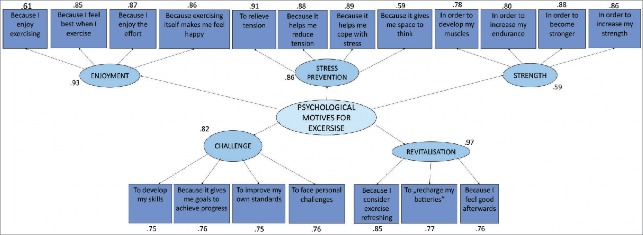

Figure 2. Confirmatory factor analysis of psychological exercise motivation variables
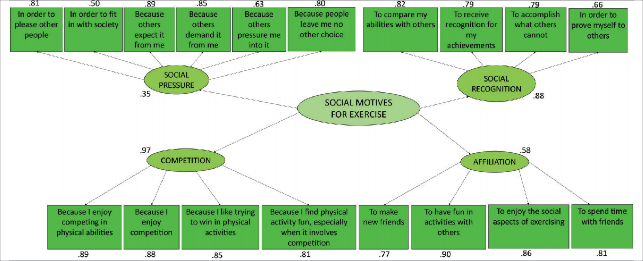
Figure 3. Confirmatory factor analysis of social exercise motivation variables
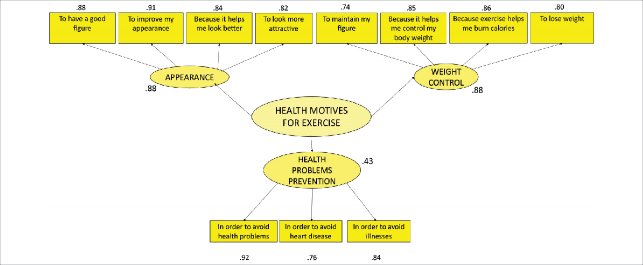
Figure 4. Confirmatory factor analysis of health exercise motivation variables
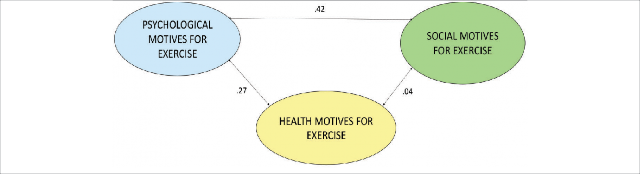
Figure 5. Correlations between psychological, social, and health exercise motivation factors
Table 2. Fit indices of the higher-order exercise motivation model

Regarding the correlations between higher-order fac- tors (Figure 5), the strongest positive correlation was observed between psychological and social motives for exercise (r = 0.42, p < 0.01), followed by the cor- relation between psychological and health motives (r = 0.27, p < 0.01). Finally, the weakest and almost negligible correlation was recorded between social and health motives for exercise (r = 0.04, p > 0.05).
Lastly, the model fit indices for the higher-order con- firmatory model of exercise motives (Table 2) indicat-
ed the need for model refinement. While a significant chi-square value is expected with such a large sample size and therefore provides limited information about model fit, the relative χ² (chi-square/df ratio) should ideally be below 5, and the CFI, NFI, and IFI indices should exceed 0.90. Additionally, the RMSEA value indicative of a good model fit should be below 0.05.
Although all values were borderline, in the next step we excluded the variables that showed the lowest loadings with the higher-order factors, in order to ex-
amine whether this would improve the quality of the model. After their exclusion, total number of mani- fest variables kept in the model was 32.
Regarding the part of the model related to psycho- logical motives for exercise (Figure 6), the manifest variables “Because I enjoy exercising” (0.61), which belonged to the enjoyment factor, and “Because it gives me space to think,” which belonged to the stress prevention factor, were removed. In addition, the strength factor was excluded, as it not only showed the lowest loading but also had the weakest
conceptual connection to the group of psychological motives for exercise. After these exclusions, all fac- tor loadings exceeded 0.75.
In the part of the model concerning social motives (Figure 7), the manifest variable “To prove myself to others,” belonging to the social recognition factor, and the latent variable social pressure were removed. The resulting loadings of manifest variables were all above 0.73, with the lowest loading observed for the affiliation factor.
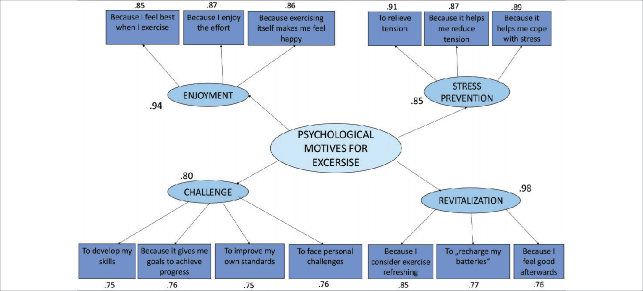
Figure 6. Confirmatory factor analysis of modified psychological exercise motivation variables
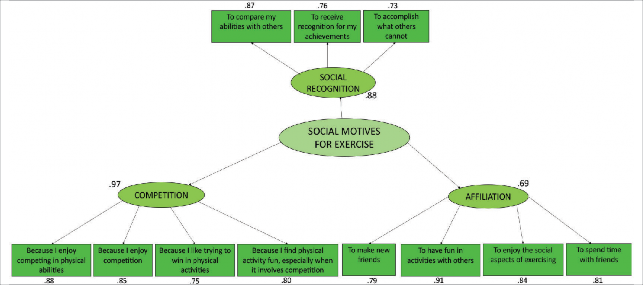
Figure 7. Confirmatory factor analysis of modified social exercise motivation variables
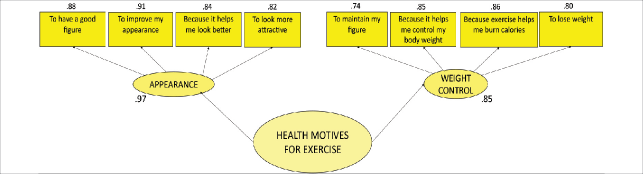
Figure 8. Confirmatory factor analysis of modified health exercise motivation variables
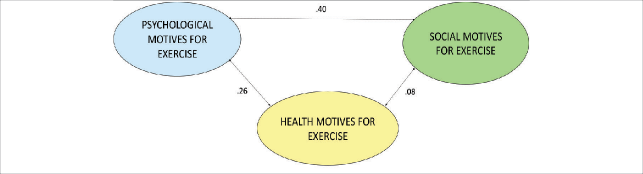
Figure 9. Correlations between psychological, social, and health exercise motivation factors after model modification
From the part of the model related to health motives (Figure 8), the factor prevention of health problems was excluded, as it showed the weakest association with the higher-order factor. This step further sim- plified and strengthened the higher-order model of exercise motives.
Simplifying the model did not substantially affect the correlations between higher-order factors (Figure 9). The strongest correlation remained between the fac- tor representing psychological motives and that rep- resenting social motives (r = 0.40, p < 0.01), while the weakest correlation was between social and health motives (r = 0.08, p > 0.05).
What was of primary interest was the change in mod-
el fit indices after simplification. As shown in Table 3, the simplified model demonstrated better fit.
Although the χ² statistic, relative χ² (χ²/df), and RM- SEA (> 0.05) remained slightly above traditionally stricter thresholds, these indices are sensitive to sample size and model complexity. In most real- world applications, SEM models often exceed these cut-offs without undermining overall validity. On the other hand, relative fit indices such as CFI, NFI, and IFI measure the improvement of the model compared to the “null” or independent model. The obtained val- ues (CFI = 0.92, NFI = 0.91, IFI = 0.92) surpass the conventional cut-off (≥ 0.90), indicating a good level of fit with the expected data pattern.
Table 3. Fit indices of the modified higher-order exercise motivation model | |||||||||
ꭓ2 | df | p | ꭓ2/df | CFI | NFI | IFI | RMSEA | 90% confidence interval | PClose |
2807.660 | 456 | 0.000 | 6.15 | 0.927 | 0.914 | 0.927 | 0.063 | 0.061-0.065 | 0.000 |
Finally, the reliability of the higher-order factors cre- ated in this way was tested (Table 4). Despite the re- duced number of manifest variables, the reliability of all three higher-order factors proved to be very high and satisfactory.
Table 4. Reliability of the modified higher- order exercise motivation variables | |||
Variable | Psychological motives for exercise | Social motives for exercise | Health motives for exercise |
Cronbach α | 0.934 | 0.919 | 0.922 |


The finding of a moderate positive correlation be- tween psychological and social motives suggests that these two categories of motivation tend to support one another. Students who exercise be- cause they enjoy it, feel better afterward, or use it to manage stress are also more likely to value social elements such as recognition, shared activity, or af- filiation. This pattern aligns well with Self-Determi- nation Theory, which emphasizes that motivation is strengthened when needs for competence, autono- my, and relatedness are jointly satisfied. In this case, the internal satisfaction associated with exercise seems to complement the social dimension, creat- ing a mutually reinforcing motivational framework. Such interplay helps explain why students who are psychologically motivated often remain engaged in social contexts of physical activity as well.
Based on the conducted analysis, it is evident that the 54 manifest variables from which the authors of the EMI-2 questionnaire initially extracted 14 latent variables can validly be reduced, through factor anal- ysis, to three latent variables representing groups of social, psychological, and health-related motives. The three obtained latent factors (social, psychological, and health motives), derived from 32 kept manifest variables, demonstrated high internal consistency, indicating the stability and reliability of this model.
In research focusing on motivation and other psycho- logical variables in sport, the importance of simplified
questionnaires with fewer manifest variables has become increasingly apparent. Such questionnaires reduce respondents’ cognitive load, resulting in more accurate and reliable data. Overly complex question- naires, on the other hand, may confuse participants and create ambiguities during responding, which can ultimately lead to less precise results (29).
Studies also show that reducing the number of variables allows for more accurate measurement of current motivational states rather than only stable traits, thereby making these instruments more use- ful across diverse contexts (30). This approach en- courages more intuitive and quicker responses, which increases the precision of the results. Measuring mo- tivation is of great importance, as it enables coaches, psychologists, and researchers to understand the key drivers of physical activity. Based on such as- sessments, personalized programs can be developed to encourage long-term participation, particularly through interventions that support autonomy, com- petence, and relatedness (20).
Moreover, the simplified structure facilitates data analysis and interpretation, which is particularly beneficial for applied research and for working with populations outside academic settings. In practical terms, shorter and clearer questionnaires can be more easily integrated into routine evaluations in sports clubs, healthcare institutions, or educational settings, thereby enhancing their utility for coaches, teachers, and other professionals.
Although research exclusively on students repre- sents a certain limitation of the study, as motives may change throughout the lifespan, the results of this study may serve as a foundation for future re- search aimed at exploring specific intervention strat- egies based on dominant motivational factors.


The simplified version of the EMI-2 questionnaire provides a reliable and valid tool for measuring mo- tives for physical activity, particularly within the context of the student population. This version facili- tates easier application in both research and practical
settings and supports the development of more ef- fective programs aimed at promoting physical activ- ity. Future research could further examine the appli- cability of this structure across different populations and contexts, thereby confirming its universality and practical value.
Conceptualization and methodology (JB, RB); data cu- ration and formal analysis (JB, IT); investigation and project administration (JB, RB); and writing – original draft and review & editing (JB, RB, IT). All authors have approved the final manuscript.
The authors declare no conflicts of interest
Not applicable.
This research did not receive any specific grant from funding agencies in the public, commercial or not for- profit sectors.


World Health Organization. Global recommendations on physical activity for health. Geneva: WHO; 2010. Available at: https://www.ncbi.nlm.nih.gov/books/ NBK305057/
Blair SN, LaMonte MJ, Nichaman MZ. The evolution of physical activity recommendations: how much is enough? Am J Clin Nutr. 2004;79(5):913S-20S. https://doi.org/10.1093/ajcn/79.5.913S
Matković A, Nedić A, Meštrov M, Ivković J. Uobičajena tjelesna aktivnost studenata Medicinskog fakulteta Sveučilišta u Zagrebu. Hrvatski športskomedicinski vjesnik. 2010;25(2),87-91. Available at: https://hrcak. srce.hr/64526 [Croatian]
Danaei G, Ding EL, Mozaffarian D, Taylor B, Rehm J, Murray CJL, et al. The preventable causes of death in the United States: comparative risk assessment of di- etary, lifestyle, and metabolic risk factors. PLoS Med. 2009;6(4):e1000058. https://doi.org/10.1371/jour- nal.pmed.1000058
World Health Organization. Nearly 1.8 billion adults at risk of disease from not doing enough physical activity. WHO; 2024. Available at: https://www.who.int/news/ item/26-06-2024-nearly-1.8-billion-adults-at-risk-of- disease-from-not-doing-enough-physical-activity
Bartoluci M, Škorić S. Uloga menadžmenta u sportskoj rekreaciji. In: Neljak B, editor. 17. ljetna škola kineziolo- ga Republike Hrvatske: zbornik radova. Zagreb: Hrvats- ki kineziološki savez; 2008. Available at: http://hrks.hr/ skole/17_ljetna_skola/464-469.pdf [Croatian]
Greblo Jurakić Z, Pedišić Ž, Jurakić D. Relationship be- tween exercise frequency and self-perceived mental health. In: Proceedings Book of 5th International Sci- entific Conference. Zagreb; 2008.
Huang TTK, Harris KJ, Lee RE, Nazir N, Born W, Kaur H. As- sessing overweight, obesity, diet, and physical activity in college students. J Am Coll Health. 2003;52(2):83-
6. https://doi.org/10.1080/07448480309595728
Butler SM, Black D, Blue CL, Gretebeck RJ. Change in diet, physical activity, and body weight in female col- lege freshman. Am J Health Behav. 2004;28(1):24-32. https://doi.org/10.5993/AJHB.28.1.3
Clemente FM, Nikolaidis PT, Martins FML, Mendes RS. Physical activity patterns in university students: Do they follow the public health guidelines? PLoS One. 2016;11(3):e0152516. https://doi.org/10.1371/jour- nal.pone.0152516
Jurakić D, Pedišić Ž, Andrijašević M. Physical activity of Croatian population: cross-sectional study using International Physical Activity Questionnaire. Croat Med J. 2009;50(2):165-73. https://doi.org/10.3325/ cmj.2009.50.165
Pedišić Ž, Rakovac M, Titze S, Jurakić D, Oja P. Do- main-specific physical activity and health-related quality of life in university students. Eur J Sport Sci. 2014;14(5):492-9. https://doi.org/10.1080/174613
91.2013.844861
Alić J. Povezanost tjelesne aktivnosti studentica, samoprocjene zdravlja i zadovoljstva tjelesnim izgle- dom [Doktorska disertacija]. Kineziološki fakultet Sveučilišta u Zagrebu; 2015. Available at: https:// dr.nsk.hr/islandora/object/kif:379/datastream/PDF/ download [Croatian]
Andrijašević M, Ciliga D, Jurakić D. Is Sports Recreation Important to University Students? Collegium antro- pologicum. 2009;33(1):163-8. Available at: https:// hrcak.srce.hr/39547
Buntić L. Kineziološka aktivnost u strukturi slobod- nog vremena studenata zagrebačkog Sveučilišta. In: Findak V, editor. 15. ljetna škola kineziologa Re- publike Hrvatske: zbornik radova. Zagreb: Hrvatski kineziološki savez; 2006. Available at: https://www. hrks.hr/skole/15_ljetna_skola/14.pdf [Croatian]
Andrijašević M, Paušić J, Bavčević T, Ciliga D. Participa- tion in leisure activities and self-perception of health in the students of the University of Split. Kinesiology. 2005;37(1):21-31.
André N, Grousset M, Audiffren M. A behavioral per- spective for improving exercise adherence. Sports Med Open. 2024;10(1):56. https://doi.org/10.1186/ s40798-024-00714-8
Ryan RM, Deci EL. Self-determination theory and the facilitation of intrinsic motivation, social develop- ment, and well-being. Am Psychol. 2000;55(1):68-78. https://doi.org/10.1037110003-066X.55.1.68
Ryan RM, Williams GC, Patrick H, Deci EL. Self-determi- nation theory and physical activity: The Dynamics of Motivation in Development and Wellness. Hell J Psych. 2009;6(2):107-24. Available at: http://selfdetermina- tiontheory.org/SDT/documents/2009_RyanWilliams- PatrickDeci_HJOP.pdf
Teixeira PJ, Carraça EV, Markland D, Silva MN, Ryan RM. Exercise, physical activity, and self-determination theory: a systematic review. Int J Behav Nutr Phys Act. 2012;9:78. https://doi.org/10.1186/1479-5868-
9-78
Wang JCK, Hagger MS. Self-determination theory in physical activity contexts. In: Ryan RM, editor. The Oxford Handbook of Self-Determination Theory. Ox- ford Academic; 2023. https://doi.org/10.1093/oxford- hb/9780197600047.013.37
Espada M, Romero-Parra N, Bores-García D, Delfa-De La Morena JM. Gender differences in university stu- dents’ levels of physical activity and motivations to engage in physical activity. Educ Sci. 2023;13(4):340. https://doi.org/10.3390/educsci13040340
Lin B, Teo EW, Yan T. Development and validation of Chinese university students’ physical activity motiva- tion scale under the constraint of physical education policies. Front Psychol. 2022;13:722635. https://doi. org/10.3389/fpsyg.2022.722635
Markland D, Ingledew DK. The measurement of exer- cise motives: Factorial validity and invariance across gender of a revised Exercise Motivations Inventory. Brit J Health Psych. 1997;2(4),361-76. https://doi. org/10.1111/j.2044-8287.1997.tb00549.x
Markland D. The Exercise Motivations Inventory. Psy- chol. 1999;3:477-89. Available at: https://www.liv- ingstrong.org/articles/ExerciseMotivations.pdf
Državni zavod za statistiku RH. Visoko obrazovanje u 2017. Zagreb: Državni zavod za statistiku; 2018. Available at: https://www.dzs.hr/Hrv_Eng/publica- tion/2018/SI-1621.pdf [Croatian]
Vlašić J, Barić R, Oreb G, Kasović M. Exercise motives in middle-aged and elderly female population. In: Milanović D, Prot F, editors. Proceedings of the 3rd International scientific conference Kinesiology - new perspectives. Zagreb: Kineziološki fakultet; 2002.
Markuš D. Razvoj modela za predviđanje životnog stila srednjoškolaca na osnovi stavova prema kineziološkim aktivnostima [Doktorska disertacija]. Zagreb: Kineziološki fakultet; 2011. [Croatian]
Brown A, Maydeu-Olivares A. How IRT can solve problems of ipsative data in forced-choice question- naires. Psychol Methods. 2013;18(1):36. https://doi. org/10.1037/a0030641
Blaise M, Marksteiner T, Krispenz A, Bertrams A. Mea- suring motivation for cognitive effort as state. Front Psychol. 2021;12:785094. https://doi.org/10.3389/ fpsyg.2021.785094